

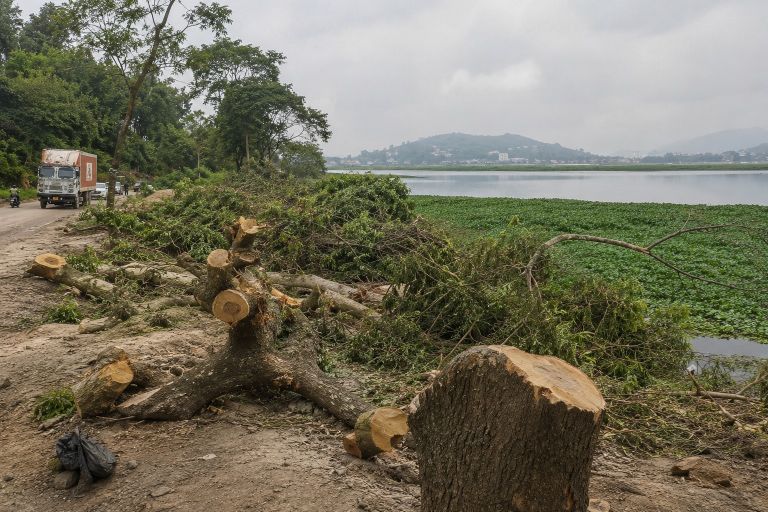
Guwahati, May 12: Reports of tree cutting activities around Deepor Beel have once again brought attention to the increasing urban pressure on one of Guwahati’s most ecologically sensitive zones. The wetland, recognised as a Ramsar site of international importance, continues to face gradual environmental stress amid expanding urban and semi-urban development in its surrounding areas.
Environmental observers and local residents have expressed concern over the changing land-use patterns near the wetland, where green cover is steadily giving way to infrastructure projects, road expansion, private construction, and other developmental activities. Experts believe that such changes, although often occurring incrementally, can collectively place significant strain on fragile ecosystems like Deepor Beel.
According to environmental experts, tree clearance in the region is frequently associated with multiple factors including road connectivity projects, land development, and urban expansion. They also point out that the absence of clearly demarcated and effectively monitored buffer zones around protected ecological areas remains a major challenge.

Deepor Beel plays a crucial role in maintaining ecological balance in the region. The wetland serves as an important habitat for migratory birds, supports rich aquatic biodiversity, and sustains the livelihoods of local communities dependent on fishing and wetland resources. Environmentalists warn that any reduction in surrounding vegetation and natural cover could further intensify the ecological stress already affecting the wetland due to pollution, encroachment, and urbanisation.
Observers note that the concern extends beyond isolated incidents of tree removal. Instead, they highlight the cumulative impact of continuous land-use changes taking place around environmentally sensitive areas. Many believe that without stronger planning regulations and effective environmental monitoring, such gradual transformations may eventually threaten the long-term sustainability of the wetland ecosystem.
The situation surrounding Deepor Beel reflects the broader challenge faced by rapidly growing cities like Guwahati, where urban development and ecological conservation often exist in direct conflict. Experts have called for balanced and sustainable planning measures that protect critical natural habitats while accommodating the city’s developmental needs.
- D Dutta