
“Tripura Chief Minister Dr. Manik Saha Asserts Firm Measures Against Illegal Drug Trade and Rohingya Infiltration

ByNE Times Desk
Aug 8, 2023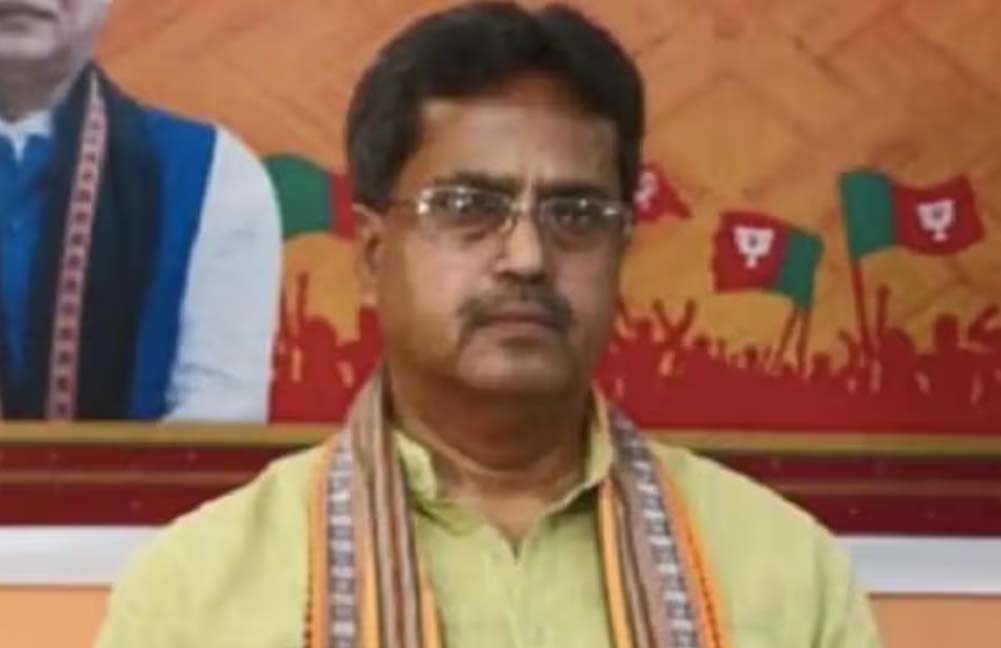
Tripura Chief Minister, Dr. Manik Saha, underscored the resolute actions his government is taking to counter various crimes, notably the illegal drug trade and the infiltration of Rohingya immigrants, who exploit the state as a gateway to India.
Following a comprehensive review meeting with state police, the Border Security Force (BSF), and other security agencies, a detailed action plan has been formulated to address the dual challenges of drug-related issues and infiltration.
Addressing the media at Prajna Bhawan after the meeting, Dr. Saha stated, “PM Modi and Home Minister Amit Shah made it clear that there can be no haven for drugs here (Tripura). We have initiated a movement for a drug-free Tripura and a drug-free India.” He further remarked, “I met with state police officials today (Tuesday) and assessed the situation. The entire police force, from stations to top-ranking personnel, is deeply committed to the cause. We have deliberated extensively on drugs, methodologies employed in the illegal drug trade, the masterminds orchestrating these operations, and strategies to apprehend them. No one engaged in the drug trade will be exempt from consequences.”
Discussing the issue of Rohingya immigrants entering India illicitly, Dr. Saha shared, “We’ve examined the matter, including their entry into Tripura. I recently visited the Unakoti district and observed that the border fencing has shifted towards India due to flooding. Flooding has also disrupted fencing in various areas. I was informed that some intermediaries facilitating Rohingya immigration maintain communication using Bangladeshi SIM cards. We take this matter very seriously. I have requested enhanced collaboration from the BSF.”
The discussion during the review meeting also encompassed cross-border cattle smuggling into Bangladesh. Reports indicate a significant network involved, with smuggled cows fetching prices between Rs 70,000 and Rs 80,000 each. Dr. Saha emphasized close cooperation between police stations in border regions and the BSF to tackle human and livestock smuggling across the border.
The Chief Minister highlighted the state government’s efforts to modernize the police force, revealing the utilization of drones and modern surveillance tools by personnel to identify cannabis cultivation sites. Dr. Saha affirmed that these technological advancements would combat the drug menace, with a focus on eradicating organized crime syndicates in the state. He acknowledged the manpower crisis faced by the state police and pledged to address this through recruitment efforts and prompt reinforcement in areas of need. He also confirmed the implementation of modern technology in police stations, including the establishment of a fully operational cybercrime police station by September this year.
Dr. Saha emphasized that the police force must ensure the delivery of “proper services” to the public and ensure the registration of First Information Reports (FIRs) when necessary.
“Our awareness initiatives, such as ‘Prayas,’ are dedicated to preventing child marriages. Tripura stands at the forefront of child marriages. We are committed to curbing this issue and welcome suggestions from all quarters on how to achieve it,” Dr. Saha stated. He acknowledged that child marriages are particularly prevalent in South Tripura and Sepahijala districts, though they are observed in other regions as well, including Unakoti district in the north.”