

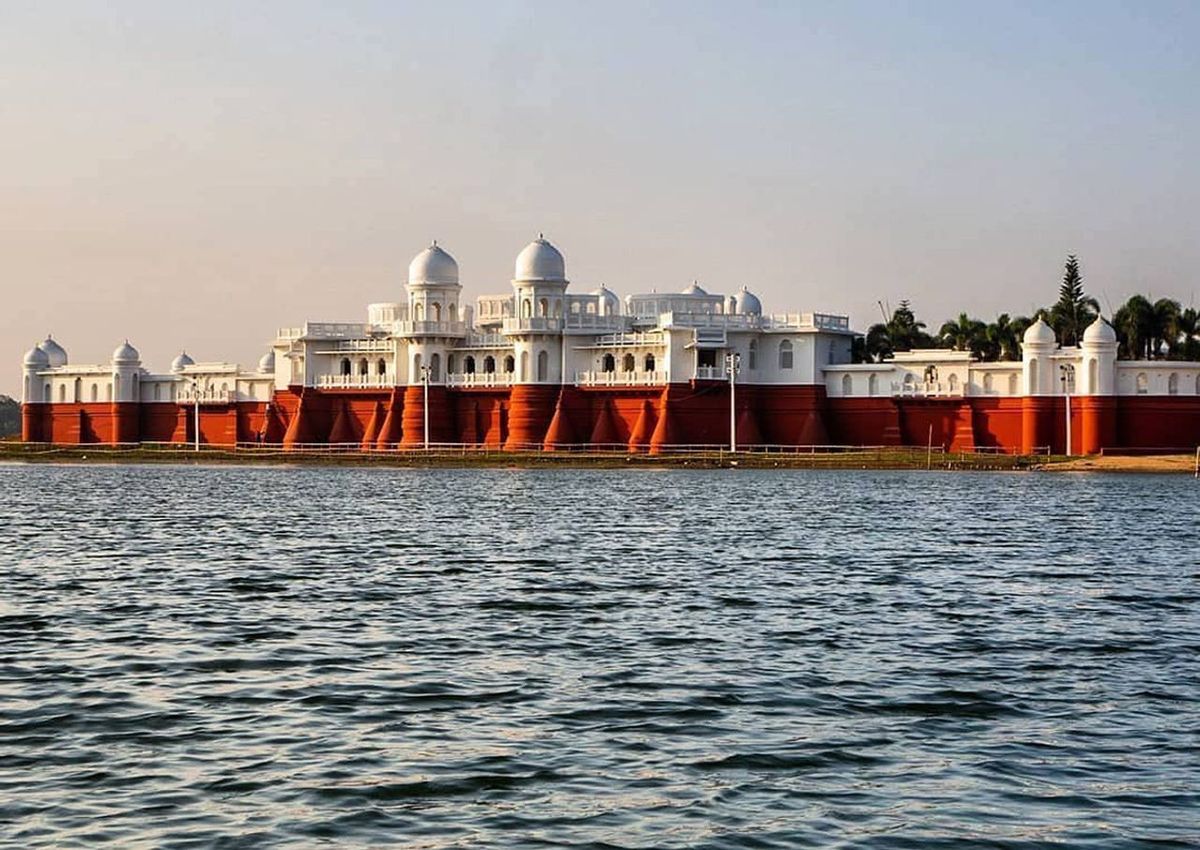
Neermahal, the enchanting “Water Palace” of Tripura, rises from the serene waters of Rudrasagar Lake like a vision from a forgotten era. Located about 53 kilometers from Agartala, this architectural marvel tells the story of royal ambition, artistic vision, and a desire to create something truly extraordinary in the heart of northeastern India.
The tale of Neermahal begins with Maharaja Bir Bikram Kishore Manikya Bahadur, a progressive ruler with a keen eye for beauty and innovation. In 1930, the Maharaja conceived an audacious plan: to build a grand palace not on solid ground, but in the middle of a lake. It was to be his summer retreat, a place where he could escape the oppressive heat and find peace surrounded by water and sky. After eight years of dedicated construction, the palace was completed in 1938, standing as a testament to both engineering prowess and aesthetic sensibility.
What makes Neermahal truly captivating is its unique architectural character. Spreading across approximately 5.35 acres in the lake, the palace can only be reached by boat, making every visit an adventure. The two-storied structure blends Hindu and Mughal architectural traditions seamlessly, creating a harmonious dialogue between two rich cultural heritages. Its distinctive red and white facade, adorned with graceful domes and elegant pavilions, reflects beautifully on the lake’s calm surface, creating mirror images that shift with the changing light.
The palace was thoughtfully divided into two distinct sections. The western wing, known as Andar Mahal or the inner palace, served as the private quarters where the royal family resided during their lakeside sojourns. The eastern section was dedicated to entertainment and cultural gatherings, featuring an open-air theater where performances would unfold against the dramatic backdrop of water and sky. Imagine the scene on warm summer evenings: courtiers and guests arriving by boat, lanterns reflecting on the water, music and dance filling the air as the palace came alive with celebration.
The craftsmanship evident throughout Neermahal speaks to the skilled artisans of that era. Intricate stonework, graceful arched doorways, decorative elements, and carefully planned courtyards all contribute to the palace’s timeless appeal. Every detail was considered, from the placement of windows to catch the lake breezes to the gardens that once flourished in this unlikely setting.
Today, Neermahal continues to captivate visitors from across India and beyond. The Tripura Tourism Department has breathed new life into the monument, organizing spectacular light and sound shows that illuminate the palace after dark while narrating the rich history of the region and its royal legacy. These evening presentations transform the palace into a glowing jewel on the water, visible for miles around.
The palace is particularly magical during sunrise and sunset, when the changing light paints the structure in shades of gold and crimson, and its reflection creates perfect symmetry on Rudrasagar Lake’s glassy surface. Photographers and travelers flock to witness these moments, when nature and human artistry collaborate to create scenes of breathtaking beauty.
Visiting Neermahal is more than just a sightseeing excursion; it’s a journey into Tripura’s royal past and an experience of architectural wonder set in natural splendor. The boat ride across the lake, the approach to the palace rising from the waters, the exploration of its rooms and courtyards -all combine to create memories that linger long after visitors depart. The surrounding area has been thoughtfully developed with boating facilities and accommodations, making this unique heritage site accessible while preserving its essential character.
In a country filled with magnificent palaces and forts, Neermahal stands apart – a floating dream, a royal refuge, and a reminder that sometimes the most remarkable creations emerge when imagination dares to build where convention suggests it cannot.
- Dipanjana D