
Swahid Smarak Kshetra Emerges as Assam’s Largest Memorial Honouring Martyrs of Assam Movement

ByNE Times Desk
Dec 10, 2025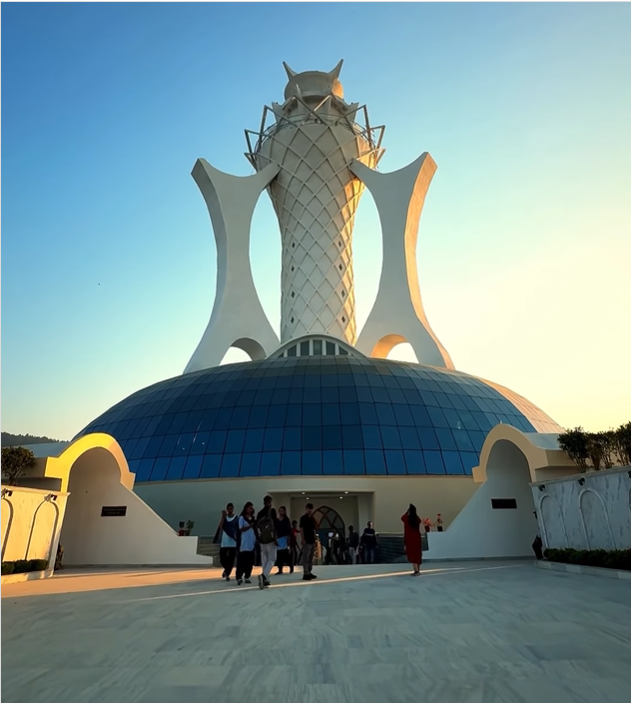
The Swahid Smarak Kshetra at Boragaon in Guwahati has emerged as a major landmark of remembrance in Assam, dedicated to the martyrs of the historic Assam Movement (1979–1985). Conceived as a permanent tribute to those who laid down their lives to protect the state’s identity, language and culture, the memorial stands today as one of the largest martyr memorials in the Northeast.
Spread over more than 116 bighas of land, the Smarak Kshetra has been developed as a comprehensive memorial-cum-public space. At its heart rises a 67-metre-high central tower, symbolising the enduring spirit and sacrifice of the martyrs. The tower is surrounded by landscaped gardens, water bodies and walkways designed to create a solemn yet reflective atmosphere for visitors.
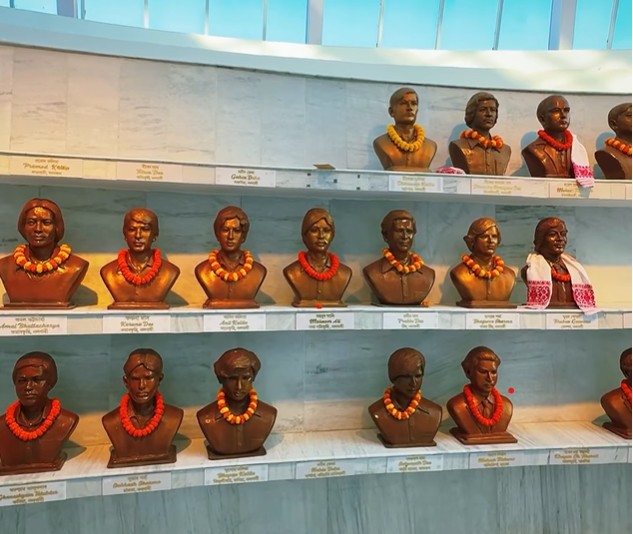
The memorial honours around 860 martyrs who lost their lives during the six-year-long mass movement. A Hall of Fame within the complex displays the names and busts of the martyrs. In cases where photographs were unavailable, their names have been engraved to ensure that no sacrifice goes unrecognised.
The Assam Movement, led largely by student and civil society organisations, was one of the most significant socio-political movements in the state’s history. It sought to safeguard Assam’s demographic and cultural identity and left a deep imprint on the collective consciousness of the people. Khargeswar Talukdar, regarded as the first martyr of the movement, is among those commemorated at the site.
Apart from the central memorial, the Swahid Smarak Kshetra includes exhibition galleries, meditation and reflection spaces, cycle tracks and open areas for public interaction. Archival photographs, documents and newspaper clippings displayed in the galleries narrate the story of the movement and the sacrifices made by ordinary citizens.
The memorial was inaugurated on Swahid Diwas, observed annually on December 10, marking a significant moment in Assam’s journey of remembrance. The occasion saw leaders and citizens paying homage to the martyrs and reiterating the importance of preserving the legacy of the movement for future generations.
Today, the Swahid Smarak Kshetra is drawing students, researchers, families of martyrs and visitors from across the state. More than a monument, it has become a space for learning, reflection and collective memory, reinforcing Assam’s commitment to honouring those who shaped its modern history.
- Dipanjana D